
Key Takeaways
- Sharp biting pain often means a cracked tooth or deep cavity
- Throbbing constant pain usually signals infection needing root canal
- Hot or cold sensitivity points to worn enamel or receding gums
- Pain that comes and goes can mean a dying nerve, not healing
- Gum pain with bleeding needs treatment before bone loss starts
- Wisdom tooth pain in the jaw usually needs proper evaluation
Not all tooth pain feels the same, and that difference matters. A sharp jolt when you bite into something cold is a completely different problem than a dull, constant ache that keeps you up at night. Knowing which type of tooth pain you’re dealing with helps you understand what’s going wrong, and how urgently you need to act.
At our dental clinic in Indirapuram, patients often describe their pain in very different ways, and each description usually points us toward a different cause. Here are the 7 most common types of tooth pain, what they usually mean, and how to find relief.
1. Sharp, Sudden Pain When Biting
This is the classic sign of a cracked tooth or a cavity that has gone deep enough to reach the sensitive inner layer of the tooth. You’ll feel a quick, sharp jab the moment you bite down on something, and then it fades just as fast.
What helps: Avoid chewing on that side of your mouth until you’re seen. Rinse with lukewarm salt water to reduce bacteria at the site. This type of pain rarely goes away on its own since the crack or decay only gets worse with time. A dentist can check with a bite test and an X ray to confirm the exact cause and recommend the right restorative dental treatment in Indirapuram, whether that’s a filling, bonding, or a crown.
2. Constant, Throbbing Pain
Throbbing pain that doesn’t let up, especially one that gets worse when you lie down, usually points to an infection inside the tooth. This is often accompanied by swelling in the gum or cheek, and sometimes a bad taste in the mouth.
What helps: Over the counter pain relief can manage the discomfort short term, but this almost always needs a root canal treatment in Indirapuram to actually clear the infection. Delaying it doesn’t make the problem go away; it just gives the infection more time to spread toward the jawbone.
3. Sensitivity to Hot or Cold
A quick, sharp zing when you sip hot tea or bite into ice cream is a sign of worn enamel or receding gums exposing the sensitive part of the tooth underneath. It’s extremely common and often mistaken for “just sensitive teeth” that people learn to live with.
What helps: Switch to a desensitising toothpaste and avoid very acidic foods and drinks for a few weeks. If the sensitivity is new or getting worse, it’s worth getting your gums checked, since receding gums are often an early sign of gum disease rather than a standalone issue.
4. Dull, Lingering Ache After Eating
If your tooth aches for a while after a meal, especially something sweet or chewy, this often points to a deep cavity or a tooth that’s cracked but not yet causing sharp pain. The nerve inside the tooth is irritated but not fully infected yet, which is actually good news, since it means the problem can often be treated with a simple filling before it needs anything more invasive.
What helps: Don’t ignore this one just because the pain fades. Book a checkup soon. Preventive care like regular dental cleaning and checkups in Indirapuram catches these cavities early, before they turn into root canal cases.
5. Pain When Chewing or Applying Pressure
This type of pain feels different from sensitivity. It’s a deeper, more localised discomfort that shows up specifically when you bite or chew, and it often means there’s an issue with the tooth’s structure itself, like a loose filling, a fractured cusp, or an infection at the root tip that flares up under pressure.
What helps: Stick to soft foods on that side and get an X ray done. Pressure related pain is one of the more reliable signs that something structural needs attention, not just surface level sensitivity.
6. Pain Around the Gums
If the pain feels like it’s coming from your gums rather than the tooth itself, especially with bleeding, swelling, or a bad smell, gum disease is usually the cause. Early gum disease, called gingivitis, is often painless, so by the time you feel pain, it may have progressed further.
What helps: Gentle brushing with a soft bristled brush, daily flossing, and a professional cleaning make a real difference here. A proper gum disease treatment in Indirapuram can stop the problem before it reaches the bone supporting your teeth. Left untreated, gum related pain tends to come and go, quietly getting worse each time.
7. Pain at the Back of the Mouth (Wisdom Tooth Pain)
A dull ache or pressure right at the back of the jaw, sometimes with slight swelling of the gum flap around it, is almost always related to wisdom teeth. This is especially common in the late teens and twenties, when wisdom teeth are still trying to come through.
What helps: Warm salt water rinses can ease mild discomfort temporarily, but impacted or partially erupted wisdom teeth usually need a dental evaluation. If the tooth is growing at an angle or trapped under the gum, wisdom tooth extraction in Indirapuram is often the most reliable long term fix, since the pain tends to return every few months otherwise.
When Tooth Pain Needs Urgent Attention
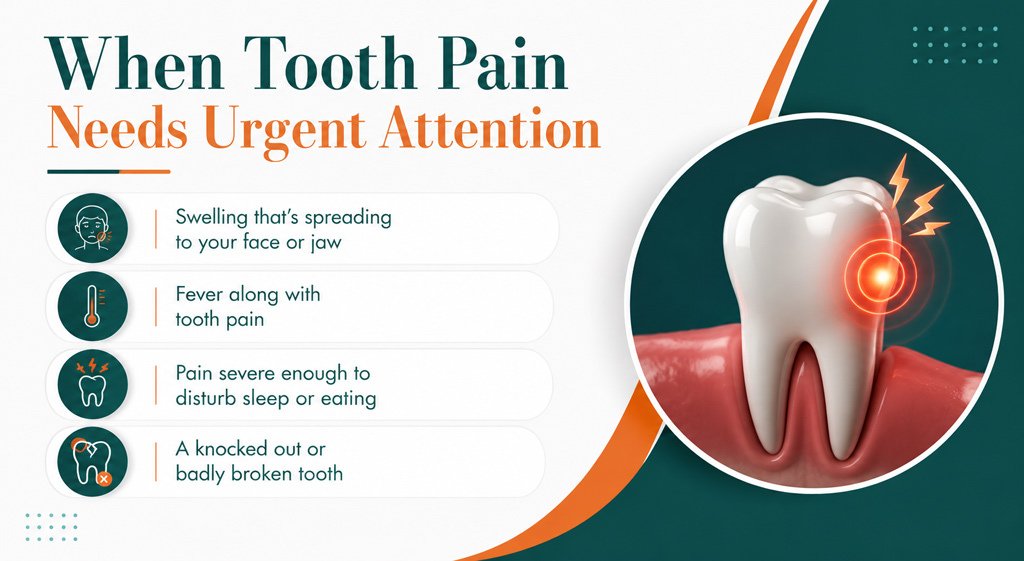
Most tooth pain can wait a day or two for an appointment, but certain signs mean you shouldn’t delay:
- Swelling that’s spreading to your face or jaw
- Fever along with tooth pain
- Pain severe enough to disturb sleep or eating
- A knocked out or badly broken tooth
If you notice any of these, it’s worth calling for an urgent slot rather than waiting for your usual date. Quick action at this stage often means a simpler treatment later.
How Sharda Dental Care Approaches Tooth Pain
Every type of tooth pain has a different root cause, so we don’t start with a generic fix. A proper diagnosis, using a clinical exam, bite testing, and X rays when needed, tells us exactly which of the seven categories above your pain falls into. From there, treatment can range from a simple filling to a root canal, gum therapy, or an extraction, always with the least invasive option tried first.
Tooth pain rarely shows up in isolation. Persistent bad breath often comes from the same gum disease that’s causing your pain, so if both are bothering you, it makes sense to get them checked in the same visit. Pain that flares up specifically when you bite can also trace back to an uneven bite, which is why orthodontic treatment sometimes comes up as part of the long term fix, not just the tooth itself.
Don’t let tooth pain drag on for days while you wait it out. The sooner it’s diagnosed, the simpler the treatment usually is. Book an appointment with Sharda Dental Care, Indirapuram, and get seen quickly by a dentist who will find the exact cause of your pain and start treatment the same day wherever possible.