Key Takeaways
- Plaque is a soft daily film brushing and flossing can remove, tartar is what forms once that plaque hardens and calcifies, and it can’t be brushed away.
- Plaque left along the gumline for about a week or more is generally what has time to mineralise into tartar.
- Once tartar has formed, only a professional dental scaling can remove it safely, scraping it off yourself risks damaging enamel or gums.
- Tartar sits right at the gumline and keeps feeding bacteria there, which is why it’s linked to persistent gum irritation, bad breath and sometimes tooth sensitivity.
- A professional cleaning resets things but doesn’t permanently stop tartar from forming again, daily brushing and flossing still matter most.
- Most dentists recommend a professional cleaning roughly every six months, sooner if you notice hard deposits, bleeding gums or breath that won’t freshen up.
Run your tongue over your teeth a day or two after skipping a proper brush and you’ll feel it, that fuzzy film. That’s plaque, and it’s where almost every common dental problem starts, from cavities to gum disease. Tartar is what plaque turns into when it’s left in place too long, and by then a toothbrush alone can’t do much about it.
People often use plaque vs tartar as if they mean the same thing, but they behave differently and need different responses. This guide covers what each actually is, how one becomes the other, and what that means for your teeth and gums in Indirapuram or elsewhere in Ghaziabad.
What Is Plaque?
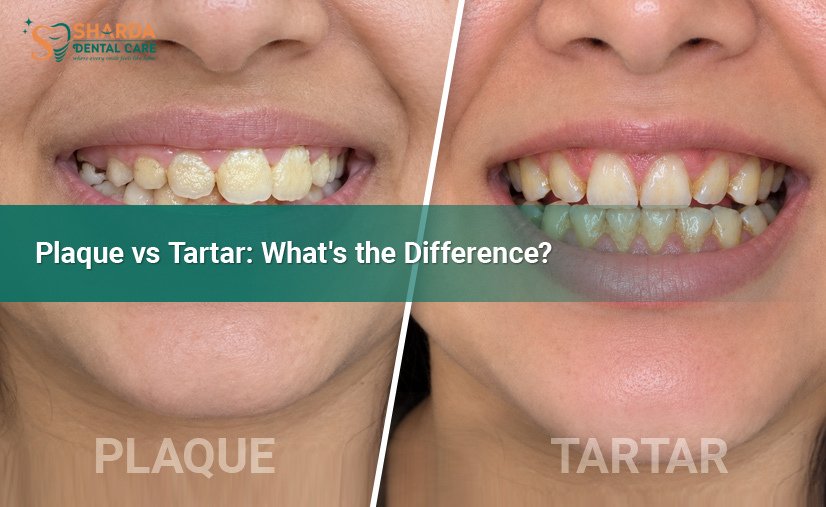
Dental plaque is a soft, sticky film of bacteria that forms on your teeth constantly, usually within hours of brushing. It builds up from bacteria in your mouth mixing with food particles and saliva, and left alone, it’s what eventually causes both cavities and early gum inflammation.
The good news is that plaque is soft, so regular brushing and flossing can physically remove it before it does any damage.
What Is Tartar?
Tartar, also called dental calculus, is what plaque turns into once it hardens on the tooth surface. It usually forms along the gumline as a yellow, brown or greyish crust that feels rough rather than smooth, and unlike plaque, it bonds tightly to enamel and cannot be brushed away at home.
It also gives bacteria more surface area to cling to, part of why it’s linked to gum irritation and bad breath that doesn’t budge with mouthwash alone.
Plaque vs Tartar: What's the Difference?
Plaque is the early, soft stage. Tartar is what happens if that stage goes unmanaged for too long. Here’s a quick side by side look at the plaque vs tartar difference.
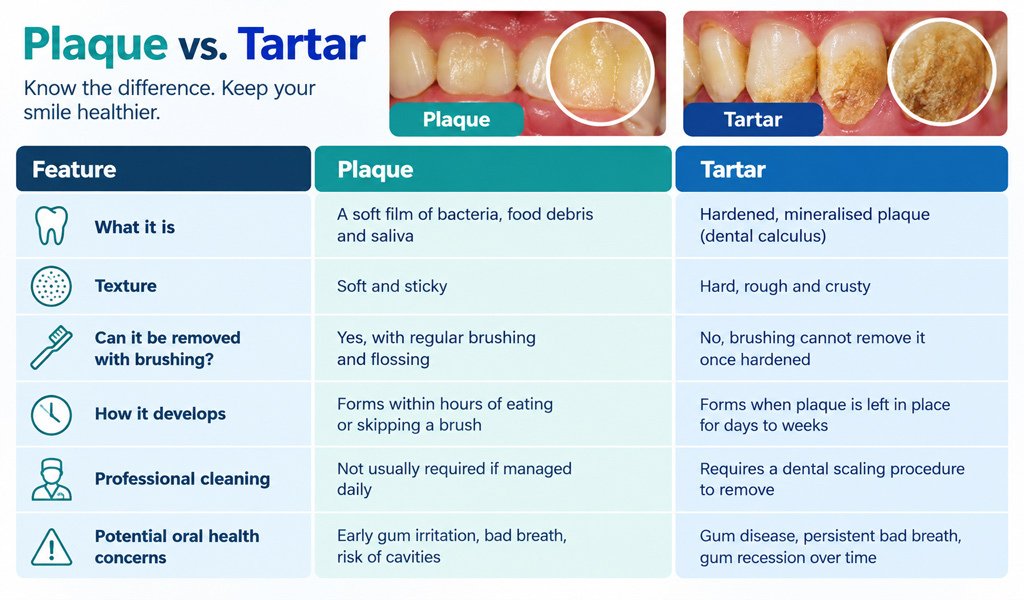
How Does Plaque Turn Into Tartar?
Tartar buildup on teeth happens through a process called mineralisation. Minerals in saliva settle into the plaque layer and gradually calcify it, usually within days if it isn’t cleaned off. Once that happens, the deposit is no longer soft bacteria sitting on the tooth, it’s fused into the tooth’s surface.
That’s why timing matters so much. Plaque that gets brushed away daily rarely gets the chance to calcify. Plaque left along the gumline for a week or more, especially in spots a regular brush struggles to reach, is a different story.
Can Plaque and Tartar Affect Your Gums?
Yes, both can, though tartar tends to cause more persistent problems. Plaque bacteria irritate gum tissue, which is what triggers gingivitis, the early and reversible stage of gum disease that shows up as redness, puffiness or bleeding gums when you brush.
Tartar makes this worse since it sits right at the gumline and keeps feeding bacteria a surface to grow on, even after brushing. Left long enough, that ongoing irritation can progress toward more advanced gum disease, along with the kind of stubborn bad breath a mint won’t fix. Gum tissue that pulls back from tartar buildup can also expose the tooth root, which is a common reason behind tooth sensitivity to hot or cold food.
Can You Remove Plaque and Tartar at Home?
Plaque, yes. Tartar, generally no. Daily brushing with a fluoride toothpaste, plus flossing or interdental cleaning, removes plaque before it hardens, and it’s genuinely the most effective thing you can do day to day for your oral hygiene.
Once plaque has mineralised into tartar, it’s fused too firmly for a toothbrush or floss to shift. Scraping it off yourself with a metal tool isn’t a safe substitute either, it risks scratching enamel or injuring gums. Removing tartar properly needs a dental scaling instrument, and that’s a job for a trained dental professional.
How to Prevent Plaque and Tartar Buildup
A few consistent habits make the biggest difference:
- Brush twice a day for two minutes with a fluoride toothpaste
- Floss or use an interdental brush once daily to clean between teeth, where a toothbrush can’t reach
- Cut back on frequent sugary snacks and sipping sugary drinks through the day
- Rinse with water after meals when brushing isn’t immediately possible
- Replace your toothbrush every three months or once the bristles fray
- Keep up with your dental checkups so any early plaque buildup gets caught before it hardens
When Should You See a Dentist for Tartar?
It’s worth getting checked if you notice visible hard, discoloured deposits near the gumline, gums that bleed or feel swollen, or bad breath that persists no matter how well you brush. Some people also notice teeth feeling rough in patches that used to feel smooth.
None of these signs mean something is seriously wrong on their own, but they usually mean plaque has had time to harden, and a dentist in Indirapuram needs to remove it rather than home care alone. If your teeth have also been looking yellower than usual, tartar near the gumline is often part of the reason.
Professional Teeth Cleaning in Indirapuram
If you live in Indirapuram, Ahinsa Khand, or near Shipra Mall and Shipra Suncity, and you’ve noticed hard deposits or gums that bleed more than they used to, it’s a reasonable time to book a professional teeth cleaning in Indirapuram rather than wait it out. This cleaning, sometimes called scaling, uses ultrasonic or hand instruments to remove tartar safely from the tooth surface and just below the gumline. It’s worth knowing that a cleaning removes tartar and surface stains, but it isn’t the same as teeth whitening, so a separate conversation is needed if your goal is a noticeably brighter smile.
The Sharda Dental, based in Indirapuram, is led by Dr. Sharda Bhat Sarup, a BDS qualified dentist with over 25 years of clinical practice across Ghaziabad. That experience matters here, judging how much scaling a gumline needs, and whether ongoing bad breath or sensitivity points to something beyond tartar, takes a trained eye rather than guesswork. Routine cleanings are offered as part of the clinic’s preventive dental care. Worth remembering, a cleaning won’t permanently stop tartar from forming again, your daily habits still matter, but it gives your gums a real chance to settle.