Key Takeaways
- Ignoring a cavity doesn’t make it stop, decay only moves forward through the tooth, never backward on its own.
- Progression speed varies by person, some cavities worsen in months, others take years, so there’s no safe fixed waiting period.
- A true cavity (an actual hole) cannot heal itself, only the very earliest pre cavity white spot stage can sometimes be reversed with fluoride.
- The usual path is enamel damage, then sensitivity, then persistent pain, then nerve involvement, then possible infection, not every case reaches the final stages.
- Caught early, most cavities need nothing more than a simple filling, root canals and extractions only come into play once decay reaches the nerve or causes infection.
- Sensitivity to hot, cold or sweet food is usually the earliest warning sign worth acting on, not waiting for actual pain.
- Families in Indirapuram, Vaishali, Vasundhara and across Ghaziabad get simpler, more affordable treatment by getting a cavity checked early rather than waiting it out.
That small dark spot on a tooth, or the twinge you feel when you sip something cold, is easy to brush off when there is no real pain yet. But a cavity rarely stays small on its own, and knowing what happens if you ignore a tooth cavity can help you decide when to book an appointment instead of pushing it to next month.
Here is how untreated tooth decay usually progresses, the signs worth paying attention to, and when to see a dentist in Indirapuram or Ghaziabad before a simple filling turns into something more involved.
What Happens If You Ignore a Tooth Cavity?
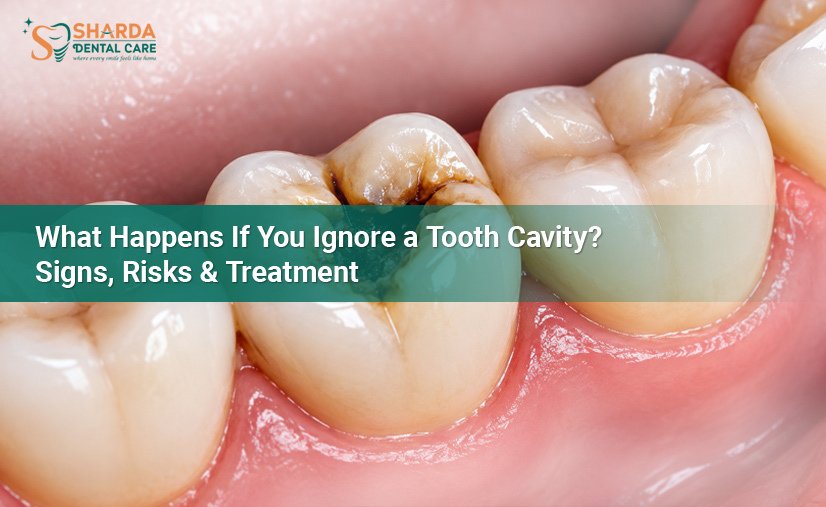
Left untreated, a cavity does not stop growing. Decay slowly works through more of the tooth, moving from the hard outer enamel into the softer dentin underneath, and in some cases further towards the nerve at the centre of the tooth. Along the way, people often notice growing sensitivity, occasional discomfort, and eventually a toothache that does not settle. In some cases, decay that reaches the nerve leads to infection or an abscess.
This does not play out the same way for everyone. Speed depends on the cavity’s size and location, your oral hygiene, diet, and how soon you seek treatment. Some cavities take months to worsen, others take years, but the direction stays the same. Untreated decay moves forward, not backward.
6 Stages of an Untreated Tooth Cavity
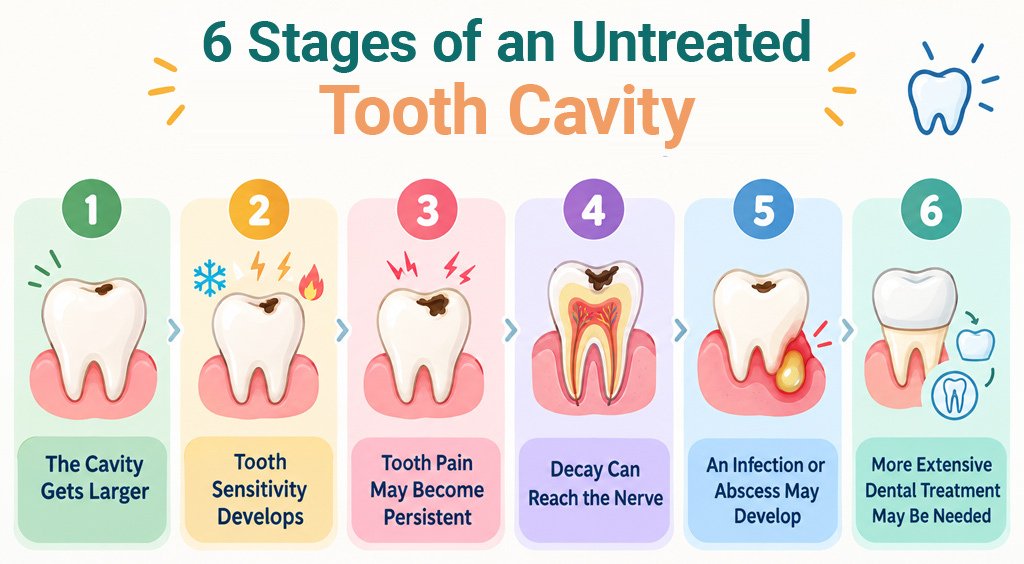
Tooth decay usually follows a fairly recognisable path, though not every case reaches the later stages. Catching it earlier almost always means a simpler, shorter treatment.
The Cavity Gets Larger
Early decay often starts as a small white or brown mark on the enamel, barely noticeable at first. Left alone, acid from decay causing bacteria keeps breaking the enamel down, and a faint mark can turn into a visible hole within months.
Tooth Sensitivity Develops
As decay moves past the enamel into the dentin layer, the tooth reacts more to hot, cold and sweet food. This is often one of the first clear signals something is wrong, as our guide on tooth sensitivity explains.
Tooth Pain May Become Persistent
An occasional twinge can turn into pain that lingers after eating, or shows up without an obvious trigger. At this stage, a straightforward filling can often still resolve it, provided you see a dentist soon.
Decay Can Reach the Nerve
Untreated decay can eventually reach the pulp, the soft tissue inside a tooth that holds its nerves and blood supply. Pain usually becomes more constant here, often signalling that a filling alone will no longer be enough.
An Infection or Abscess May Develop
Once bacteria reach the pulp, an infection can set in, sometimes leading to an abscess, a pocket of pus that causes swelling, throbbing pain and sometimes mild fever. Not every untreated cavity reaches this point, but when it does, it needs attention without delay.
More Extensive Dental Treatment May Be Needed
By the time decay has caused serious damage or infection, treatment moves beyond a simple filling. This could mean root canal treatment to save the tooth, a crown to protect what remains, or in severe cases, extraction. Comparing root canal treatment against tooth extraction is worth doing early, since the decision only gets harder the longer you wait.
Signs You Shouldn't Ignore a Tooth Cavity
- A visible dark spot, stain or small hole on a tooth
- Sensitivity to hot, cold or sweet food and drink
- Pain when biting or chewing on one side
- A dull ache that comes and goes through the day
- Bad breath or an odd taste that does not go away
- Visible swelling in the gum near a tooth
- A toothache strong enough to wake you at night
If any of these sound familiar, have the tooth examined rather than waiting to see if it settles by itself.
Can a Cavity Go Away on Its Own?
No, once a cavity has formed an actual hole, it cannot heal on its own. Enamel does not regenerate the way skin or bone does.
There is one exception. In the very earliest stage, before a true cavity forms and enamel is just beginning to lose minerals (often seen as a chalky white spot), it is sometimes possible to pause or reverse this with fluoride, better brushing and a few dietary changes. Once decay has broken through the enamel surface, professional treatment is the only reliable way to stop it going further.
When Should You See a Dentist for a Cavity?
Ideally, at the first sign of a problem, not once pain shows up.
- See a dentist as soon as you notice sensitivity, a visible spot or discomfort while eating
- Do not wait for pain, since decay can progress well before it starts hurting
- Treat a constant toothache, or one that wakes you at night, as urgent
- Sudden swelling, fever or a bad taste alongside pain needs same day attention
Families in Indirapuram, Vaishali, Vasundhara and nearby parts of Ghaziabad who get a cavity checked early usually get a shorter, simpler and more affordable visit than those who wait until it turns into a bigger problem.
Cavity Treatment Options
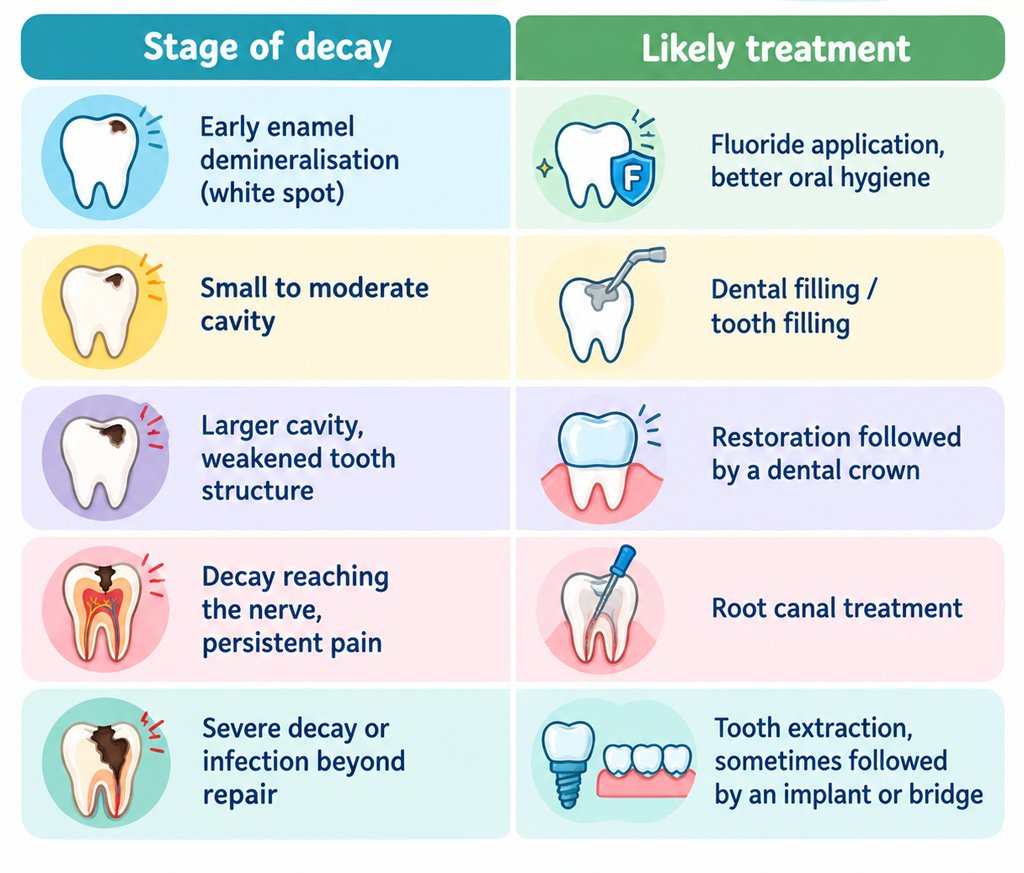
Plenty of cavities are treated with a simple filling when caught in time. What your tooth actually needs depends on how far the decay has progressed, and only an in person check and an X ray can confirm that. Our comparison of dental crowns and fillings covers when each is used, and our restorative dentistry page covers the full range of options for a damaged tooth.
How to Prevent Tooth Decay From Getting Worse
- Brush twice a day with fluoride toothpaste, and do not rush it
- Floss daily to clear the spots a toothbrush cannot reach
- Cut back on frequent snacking and sugary drinks, since how often you eat sugar matters more than how much
- Rinse with plain water after sugary or acidic food when you cannot brush right away
- Visit a dentist for a checkup every six months, even when nothing feels wrong
- Ask about fluoride treatment or sealants if you or your child get cavities often
- If you grind your teeth at night, read about teeth grinding (bruxism), since it wears down enamel and can speed up decay
Routine preventive dental care alongside these habits makes it far less likely that a small cavity ever gets the chance to progress this far.
Looking for a Dentist in Indirapuram or Ghaziabad?
If a cavity has been bothering you, or you suspect one but have not had it checked, Sharda Dental Care is based in Indirapuram and sees patients from Vaishali, Vasundhara, Kaushambi and across Ghaziabad. Dr. Sharda Bhat Sarup brings over 25 years of clinical experience to every case, from a routine filling to more involved restorative work, so you do not have to keep searching for a dentist near me and hoping for the best. Book a consultation and get a clear, honest assessment of what your tooth actually needs.
Disclaimer: This article is meant for general awareness and does not replace a proper dental examination. Please consult Dr. Sharda Bhat Sarup or a qualified dentist in person for any diagnosis or treatment plan.