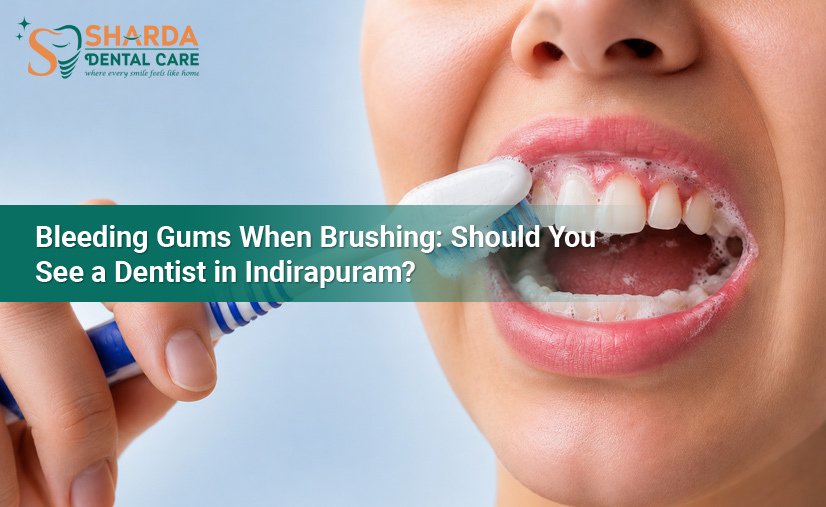
You spit into the sink and there it is again. A thin streak of pink or red mixed in with the toothpaste foam. Most people brush it off, literally, and go about their day. But bleeding gums are one of those symptoms your mouth uses to send you a message, and it is worth listening to before it turns into something bigger.
At Sharda Dental Care in Indirapuram, this is one of the most common concerns patients bring up during a regular checkup. They usually did not come in for gum bleeding specifically. It came up almost as an afterthought, mentioned while talking about something else entirely.
Why Your Gums Bleed in the First Place
Healthy gums do not bleed when you brush or floss. If yours do, the tissue around your teeth is likely inflamed. This condition is called gingivitis, and it happens when plaque, a sticky film of bacteria, builds up along the gum line and irritates the soft tissue.
A few common reasons this happens:
Plaque and tartar buildup from inconsistent brushing or flossing habits. Using a toothbrush with hard bristles or brushing too aggressively. Hormonal changes, which is why many women notice bleeding gums during pregnancy. Certain medications, including blood thinners, which can make gums bleed more easily. Vitamin C or vitamin K deficiency, though this is less common than people assume. Smoking, which masks early bleeding but worsens gum disease underneath.
Some of these causes are minor and fixable with a change in your brushing technique. Others point toward gum disease that needs professional attention. The tricky part is that you cannot always tell the difference just by looking in the mirror.
When It's More Than Just Gingivitis
When Gingivitis is More Than Gingivitis If left to linger long enough, gingivitis can develop into periodontitis, a more serious gum disease. Now the infection begins to affect the bone and tissue that anchors your teeth. If left untreated this can eventually result in loose teeth or tooth loss.
Signs that suggest you are dealing with something beyond simple gingivitis include gums that look red, swollen, or pulled away from your teeth, persistent bad breath that does not go away with brushing, gums that bleed even when you are not brushing, and any noticeable shifting or looseness in your teeth.
None of this is meant to alarm you. Gum disease is extremely common and very treatable, especially when caught early. That is really the whole point of this blog: catching it early.
So, Should You See a Dentist in Indirapuram?
If your gums bleed occasionally and stop within a few days of gentler brushing, it is reasonable to monitor it at home for a short while. But if the bleeding continues for more than a week, happens every time you brush, or comes with swelling and bad breath, it is time to book a checkup rather than wait it out.
Many residents around Indirapuram, Ahinsa Khand, Vaishali, and Vasundhara tend to push off dental visits until there is actual pain. Gum disease often does not hurt in its early stages, which is exactly why it goes unnoticed for months. A simple scaling and cleaning session, along with a review of your brushing technique, can often resolve early gum inflammation without any complicated treatment. If you have not settled on a clinic yet, our guide on choosing the best dentist near Ahinsa Khand, Indirapuram covers what to actually look for beyond star ratings.
At our clinic in Indirapuram, our approach starts with understanding what is actually causing the bleeding rather than jumping straight to a fix. Sometimes it is technique. Sometimes it is tartar buildup that only a professional cleaning can remove. And sometimes it needs a closer look at your overall oral health, including your bite and any restorative work you may already have. You can read more about how we approach this on our Preventive Dental Care page.
What You Can Do Starting Today
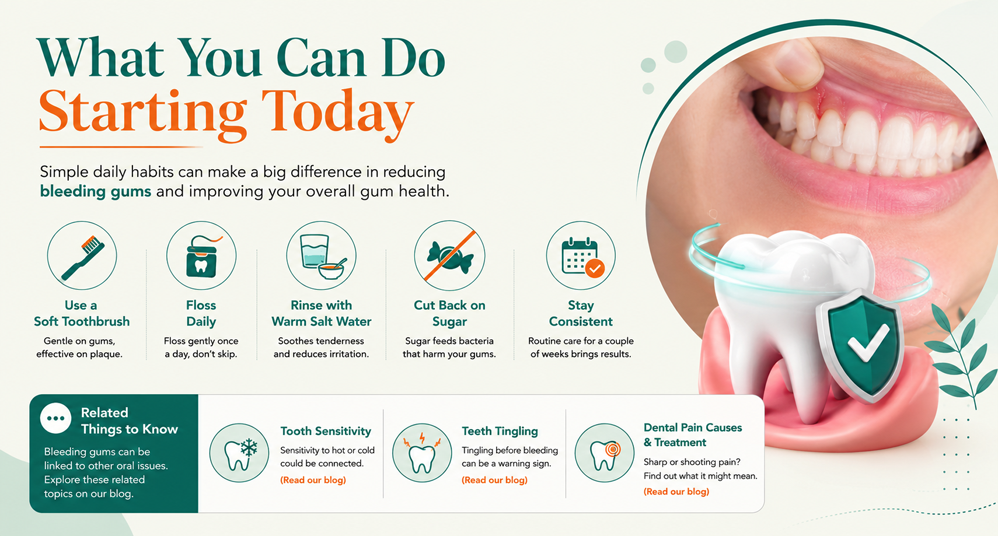
While you wait for your appointment, or even if you are just trying to improve your gum health generally, a few habits genuinely help:
Switch to a soft bristled toothbrush if you have not already. Floss gently once a day rather than skipping it because it feels uncomfortable. Rinse with warm salt water if your gums feel tender. Cut back on sugary snacks between meals, since sugar feeds the same bacteria causing the irritation. Stay consistent. Gum tissue responds well to routine care over a couple of weeks.
If you have also been noticing sensitivity to hot or cold foods alongside the bleeding, it may be connected. We covered this in detail in our blog on tooth sensitivity, which is worth a read if that sounds familiar. Some patients also describe a tingling sensation before bleeding starts, and we have written about that too in our piece on teeth tingling.
Gum health is closely tied to the rest of your mouth, so if bleeding has been accompanied by any sharp or shooting pain, our blog on dental pain causes and treatment breaks down what that might mean as well.
A Quick Word on What to Expect at the Clinic
A gum health checkup is generally quick and not uncomfortable. Your dentist will check for pockets forming around your teeth and likely recommend a professional cleaning if there is visible tartar. In more developed cases, a deeper cleaning called scaling and root planing may be suggested. Treatment really depends on what your dentist observes during the examination.
If you are near Indirapuram, Ahinsa Khand, or the surrounding parts of Ghaziabad and have been noticing blood when you brush, it is worth getting it looked at. Gum health is also something that tends to run through a household, so if you are managing checkups for your kids and parents alongside your own, our blog on why a family dentist in Indirapuram can simplify this is worth a look too. You can book an appointment with our team.
This blog is meant for general awareness and does not replace a professional dental consultation. Every case of gum bleeding is different, and only an in person examination can confirm the cause and the right treatment for you.