
You bite into something cold and a bolt of pain shoots through your tooth. Or maybe it hits out of nowhere, a quick, electric jolt that stops you mid-sentence. Sharp shooting dental pain is one of those things that grabs your full attention, fast.
The good news? That sudden pain is almost always your body sending you a clear signal. Something needs attention, and catching it early usually means simpler, more comfortable treatment. At Sharda Dental Care, we see patients every week who put off that first visit because they hoped the pain would just disappear. Sometimes it does settle down on its own. But the underlying cause rarely fixes itself.
Here is a closer look at what might be behind that sharp pain, when you should be concerned, and what your dentist can actually do about it.
What Actually Happens Inside a Sensitive Tooth?
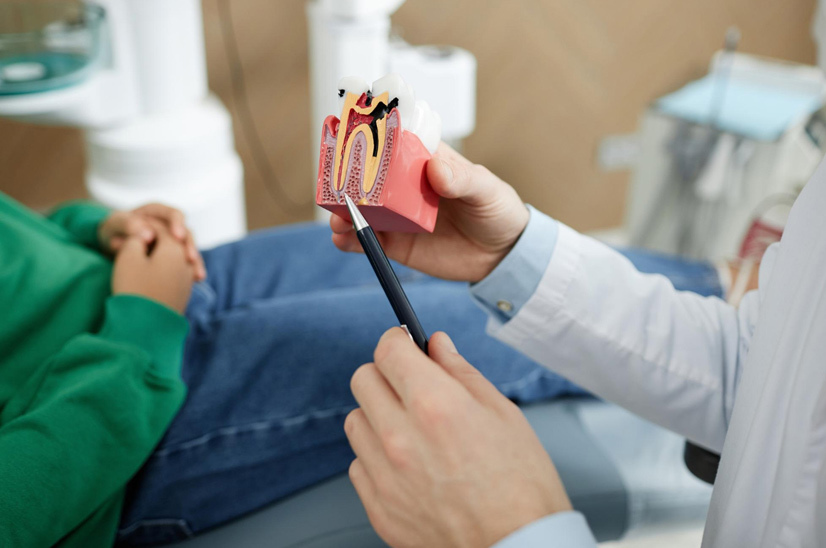
Your teeth have layers. The outermost layer, enamel, is the hardest substance in your body and acts as a shield. Underneath the enamel sits dentin, a softer tissue riddled with thousands of microscopic tubes called dentinal tubules. These tiny channels run from the tooth’s surface all the way to the nerve at the centre.
When enamel wears thin or gums pull back to expose the root (which has no enamel covering at all), those tubules become open pathways. Hot tea, iced water, a spoonful of sugar, even a gust of cold air can travel through those channels and reach the nerve.
Your nerve responds the only way it knows how: with a short, sharp jolt of pain. This is exactly why many people ask, why do my teeth hurt with cold dentin hypersensitivity—the answer lies in these exposed pathways.
So sensitivity is not a disease on its own. It is a symptom, a signal that something has changed in your tooth’s protective layers.
Common Causes of Tooth Sensitivity
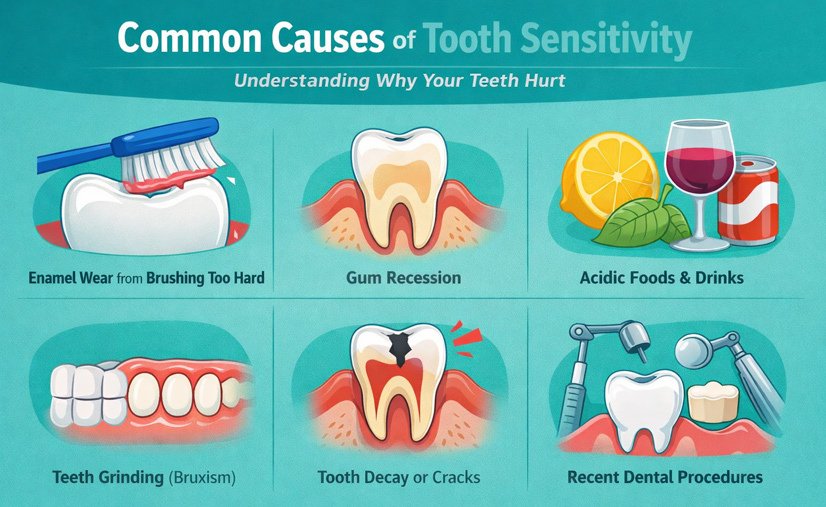
1. Enamel Wear from Brushing Too Hard
It sounds counterintuitive, but brushing harder does not mean brushing better. A stiff-bristled brush or too much pressure can gradually scrub away enamel, especially along the gum line where the enamel is naturally thinnest. Over months and years, this creates patches of exposed dentin that react to temperature changes.
Switching to a soft-bristled brush and using gentle, circular motions instead of aggressive back-and-forth scrubbing can make a noticeable difference within weeks.
2. Gum Recession
Your gums are meant to hug your teeth snugly, covering and protecting the roots. When gums recede, they expose root surfaces that were never designed to face the outside world. Root surfaces lack enamel entirely, which means the dentin and its tubules are right at the surface.
Gum recession can happen gradually due to gum disease, aggressive brushing, or simply ageing. If you have noticed your teeth looking a little longer than usual, or if you can see a yellowish band near the gum line, recession may be the reason behind your sensitivity.
3. Acidic Foods and Drinks
Citrus fruits, tomatoes, carbonated drinks, wine, and even some herbal teas are acidic enough to erode enamel over time. The erosion does not happen overnight, but regular exposure without rinsing or buffering with water slowly thins your tooth’s protective coating.
You do not need to avoid these foods entirely. Rinsing your mouth with plain water after consuming acidic foods, and waiting at least 30 minutes before brushing (brushing on softened enamel can cause more damage), goes a long way.
4. Teeth Grinding (Bruxism)
Grinding or clenching your teeth, often during sleep, puts enormous pressure on enamel. Over time, the enamel wears down unevenly, and the dentin underneath starts to show through. Many people grind their teeth without realising it. If you wake up with a sore jaw, headaches, or your partner mentions hearing you grind at night, bruxism could be contributing to your sensitivity.
A custom night guard from your dentist cushions the teeth and prevents further wear. Off-the-shelf guards are available too, though a custom-fitted one tends to be more comfortable and effective.
5. Tooth Decay or Cracks
Cavities and hairline cracks both create openings in your tooth’s defence. When decay or a fracture reaches the dentin layer, hot and cold stimuli have a direct line to the nerve. The key difference from general sensitivity is that the pain is usually localised to one specific tooth rather than spread across several.
If one tooth is significantly more sensitive than the rest, it is worth getting it checked. Early treatment with a filling, crown, or bonding can stop the problem before it becomes more serious.
6. Recent Dental Procedures
Fillings, professional cleanings, teeth whitening, and crown preparations can all leave your teeth temporarily sensitive. The treatment process can irritate the nerve or remove a thin layer of surface material, and it takes time for things to calm down.
Post-treatment sensitivity typically fades within a few days to a couple of weeks. If it persists or worsens beyond that window, check in with your dentist.
Also Read: Sharp Shooting Dental Pain: Causes, Symptoms, and Effective Treatments
Sensitivity or Something More Serious?
Not all tooth pain is simple sensitivity. Here are some signs that something deeper may be going on:
- Pain that lingers for more than 30 seconds after the hot or cold trigger is removed
- Spontaneous pain with no obvious trigger
- Throbbing or pulsing pain, especially at night
- Swelling in the gum near the sensitive tooth
- Pain that has gotten steadily worse over days or weeks
These patterns can point to an infection, deep decay, or nerve damage that needs more than a desensitising toothpaste. If any of these sound familiar, seeing your dentist sooner rather than later is the right call.
How Your Dentist Can Treat Tooth Sensitivity
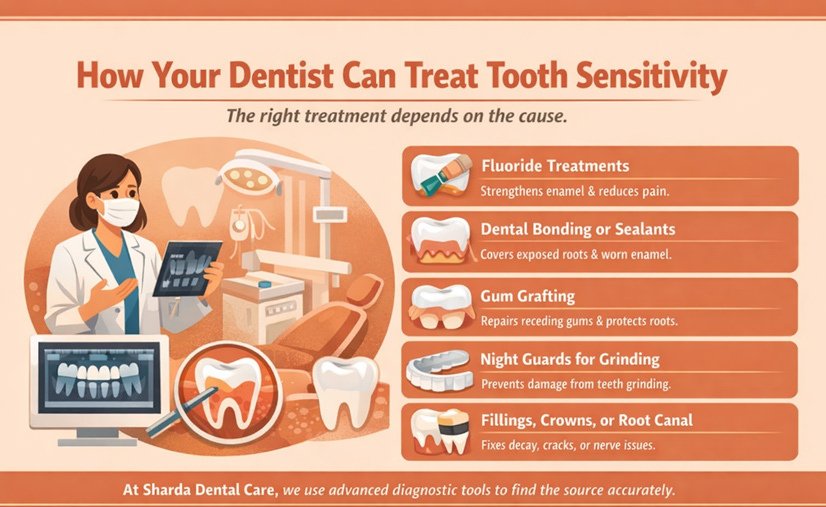
The right treatment depends on the cause. Your dentist will examine your teeth, review your symptoms, and may take digital X-rays to see what is happening beneath the surface. At Sharda Dental Care, we use digital X-ray technology and precision diagnostic tools to find the source accurately before recommending any treatment.
Here are the most common professional approaches:
Fluoride Treatments
Professional-strength fluoride applied to sensitive areas strengthens weakened enamel and reduces pain signals travelling through the tubules. This is quick, painless, and often provides noticeable relief after just one or two applications.
Dental Bonding or Sealants
Your dentist can apply a thin layer of bonding resin or sealant over exposed root surfaces or worn enamel. This physically blocks the tubules and protects the dentin from outside triggers. The procedure takes minutes and can last for years with proper care.
Gum Grafting
For significant gum recession, a gum graft takes a small amount of tissue (usually from the roof of your mouth or a donor source) and covers the exposed root. This restores the natural protective barrier and reduces sensitivity at the source.
Night Guards for Grinding
If bruxism is wearing down your enamel, a custom night guard stops further damage while you sleep. It will not reverse existing wear, but it prevents the problem from getting worse, and combined with other treatments, sensitivity often improves significantly.
Fillings, Crowns, or Root Canal Treatment
When sensitivity stems from a cavity, crack, or nerve damage, your dentist will address the structural issue directly. A filling or crown restores the tooth’s integrity. In cases where the nerve is damaged beyond repair, root canal treatment removes the source of pain entirely and saves the tooth.
What You Can Do at Home to Manage Sensitivity
Professional treatment delivers the strongest results, but there is plenty you can do at home to support the process and keep sensitivity in check:
- Use a desensitising toothpaste containing potassium nitrate or stannous fluoride. These ingredients block the tubules and calm nerve signals over time. Give it at least two weeks of consistent use before judging results.
- Switch to a soft-bristled toothbrush and brush with light pressure. Let the bristles do the work rather than your arm.
- Rinse with plain water after eating or drinking acidic foods. Wait 30 minutes before brushing.
- Avoid whitening toothpastes if your teeth are already sensitive. Many contain abrasives or peroxide that can make things worse.
- Try rinsing with a fluoride mouthwash before bed to strengthen enamel overnight.
These habits work best when combined with regular dental visits. Your dentist can monitor changes and adjust your care plan as needed.
Keeping Sensitivity from Coming Back
Once you have managed the pain, a few ongoing habits help keep it from returning. Brush twice daily with a soft brush and fluoride toothpaste. Floss every day. Limit acidic foods and drinks, or at least rinse with water afterward. If you grind your teeth, wear your night guard consistently. And keep up with your six-monthly dental check-ups, because the best way to prevent sensitivity is to catch enamel wear, gum recession, or early decay before they start causing symptoms.
Tired of Avoiding Your Favourite Foods? Let Us Help.
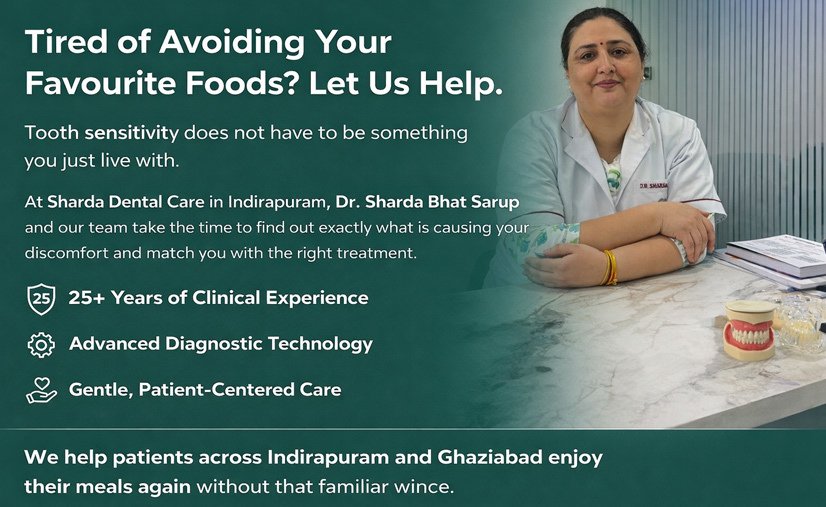
Tooth sensitivity does not have to be something you just live with. At Sharda Dental Care in Indirapuram, Dr. Sharda Bhat Sarup and our team take the time to find out exactly what is causing your discomfort and match you with the right treatment.
With 25+ years of clinical experience, advanced diagnostic technology, and a gentle approach that puts your comfort first, we help patients across Indirapuram and Ghaziabad enjoy their meals again without that familiar wince.
Ready to find relief? Book a consultation today. Call us or visit theshardadental.com to schedule your appointment.
Frequently Asked Questions
Why are my teeth suddenly sensitive when they were not before?
Sudden sensitivity often points to a recent change: new enamel wear, a developing cavity, a small crack, or gum recession that has just reached a tipping point. A dental examination can pinpoint what triggered the shift and how to address it.
Is tooth sensitivity permanent?
In most cases, no. With the right treatment, whether that is a desensitising toothpaste, professional fluoride application, bonding, or addressing an underlying cavity, sensitivity can improve significantly or resolve completely.
Can whitening treatments cause sensitivity?
Yes. Both in-office and at-home whitening products can temporarily increase sensitivity, especially if your enamel is already thin. If you want whiter teeth but have sensitive teeth, talk to your dentist about gentler whitening options or pre-treatment with desensitising agents.
Should I stop eating cold foods if my teeth are sensitive?
You do not need to avoid cold foods forever, but reducing exposure while you get treatment makes sense. Once the underlying cause is addressed, most patients can return to eating and drinking normally without discomfort.
How long does desensitising toothpaste take to work?
Most desensitising toothpastes need about two to four weeks of consistent twice-daily use before you notice a clear improvement. If there is no change after a month, see your dentist as the sensitivity may need professional treatment.