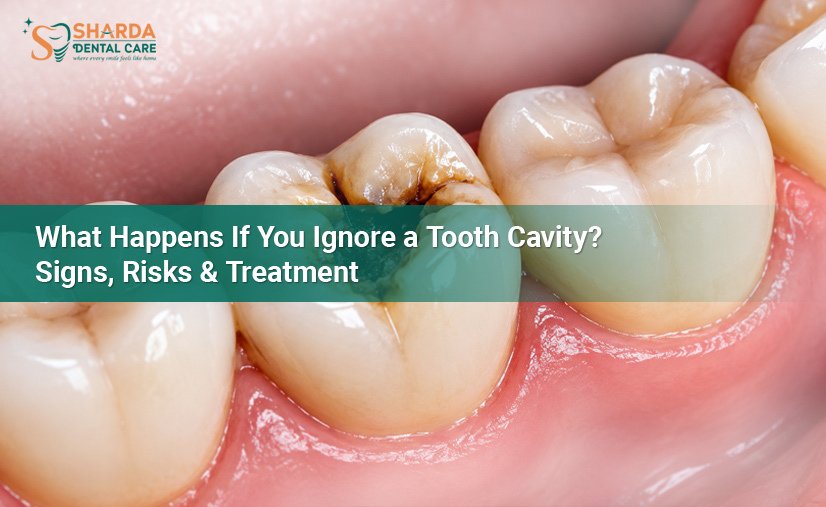
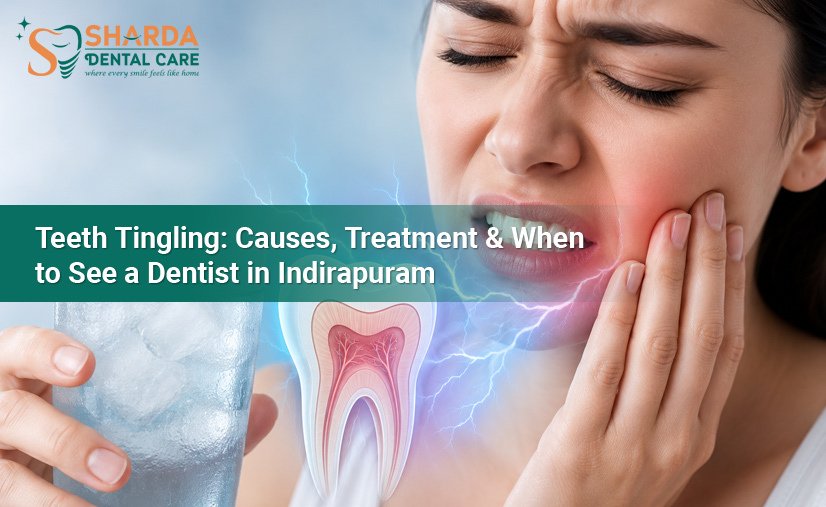
That weird tingle in your front tooth after a sip of cold water. The tiny buzz in your molar when you bite into something sweet. It’s annoying. It’s also your tooth telling you something is off.
Teeth tingling isn’t a wait-and-see symptom. It’s an early warning. Catch it now and the fix is often a simple desensitizing toothpaste or a fluoride application. Ignore it for six months and you’re looking at a filling, root canal, or worse.
Here’s what’s actually happening inside your tooth, why it tingles, and the point at which you should stop Googling and book a chair at a dental clinic near me for sensitivity.
What is teeth tingling?
A tingling sensation in teeth is a low-grade, buzzy nerve signal coming from inside your tooth. It usually happens because the protective enamel on the outside, or the gum covering the root, has thinned. Cold air, sweet food, hot tea, even brushing can now reach the nerve directly. Your tooth doesn’t have a mild pain setting, so it sends a tingle instead.
If the tingling lasts more than a few seconds, repeats over several days, or starts spreading to your lips or jaw, that’s not normal sensitivity anymore. That’s the point you stop self-treating and call a dentist.
Why your teeth tingle: the eight common causes
Most people assume tingling teeth means a cavity. Sometimes it does. Often it doesn’t. Here’s the actual list, in roughly the order we see it at our clinic in Indirapuram.
1. Enamel wear (the most common cause)
The hard outer shell of your tooth, called enamel, is the strongest material in your body. It also doesn’t grow back. Years of acidic food, fizzy drinks, lemon water, and aggressive brushing slowly thin it. Once the layer underneath, called dentin, is exposed, every sip of cold or sweet hits the nerve.
A useful rule of thumb: if you brush hard with a stiff brush, you’re wearing enamel down. Switch to a soft brush and let the bristles do the work, not your arm.
2. Gum recession
Gums protect the lower part of your tooth, called the root. The root has no enamel. So when gums pull back, even a centimetre, the exposed root is wildly sensitive.
Recession sneaks up on you. You won’t see it in the mirror until it’s already happened. Common triggers in NCR patients we see: years of horizontal scrubbing while brushing, undiagnosed gum disease, and grinding teeth at night.
3. A small cavity you can’t see yet
Cavities don’t always start as the dark spots Bollywood ads show you. Early decay shows up as a tingle, especially after sweets, before it ever shows up in a mirror. If one specific tooth tingles when you eat sugar, get it checked. A cavity caught at this stage is a 20-minute filling. Caught a year later, it’s a root canal.
4. A cracked tooth
Hairline cracks are invisible to the naked eye but can run from the chewing surface down to the root. Biting hard on supari, ice, or a stone hidden in dal can crack a tooth without breaking it. The crack opens slightly when you bite, sending a tingle down the nerve, then closes. This is called a biting tingle and it’s a giveaway sign.
5. Recent dental work
Just had a filling, crown, or whitening session? Some tingling for the first one to two weeks is normal. The nerve inside the tooth is settling after being disturbed. If it’s worse than tingling, or hasn’t faded after two weeks, call us. It’s not supposed to last longer than that.
6. Teeth grinding (bruxism)
A surprising number of working professionals in Indirapuram grind their teeth at night without knowing it. The first sign isn’t pain. It’s tingling, especially in the molars. Grinding wears enamel from the top down and inflames the nerve from chronic pressure. Mouthguards solve this.
7. Sinus pressure (the impostor)
Your upper back teeth share a nerve neighbourhood with your sinus cavities. A bad sinus infection, common during NCR’s October to January air pollution spikes, can make multiple upper teeth tingle at once. If your forehead and cheekbones also feel heavy, it’s likely sinus, not your teeth. Treat the sinus, the tingling clears.
8. Anxiety and hyperventilation
This one surprises patients. Rapid, shallow breathing during stress lowers blood carbon dioxide, which can cause tingling lips, fingertips, and yes, sometimes teeth. The fix isn’t dental. It’s slowing your breath and, longer-term, addressing the stress.
Why your teeth tingle after eating sweets
Sugar molecules are small. When enamel is thin or dentin is exposed, sugar particles slip into microscopic tubules in the dentin and reach the nerve in seconds. The nerve fires. You feel a sharp, brief tingle.
A one-off tingle after a gulab jamun isn’t an emergency. A reliable, predictable tingle every time you eat anything sweet, in the same tooth, is. That tooth is asking for help.
What about tingling lips?
Tingling lips are not always a dental issue, but two dental causes are worth knowing about.
The first is post-treatment numbness recovery. Local anaesthesia for a procedure on your lower jaw can leave the lip and chin tingling for hours, sometimes a full day, as the nerve wakes up. This is normal.
The second is rare but real: nerve compression or irritation from a wisdom tooth, a poorly fitting denture, or an infected lower molar pressing on the inferior alveolar nerve. If your lip tingling is one-sided, persistent, and started around the same time as a dental issue, get it examined.
If your lip tingling is on both sides, with no obvious dental cause, please see a physician, not just a dentist. The cause is more likely systemic such as vitamin B12 deficiency, calcium imbalance, anxiety, or a neurological condition than dental.
How to stop teeth tingling at home
Before you book anything, try these for two weeks. If the tingling fades, you’ve solved it. If not, you’ve got useful information for your dentist.
Switch to a desensitizing toothpaste. Look for potassium nitrate, stannous fluoride, or novamin on the back of the tube. Use it twice a day. Don’t rinse heavily after. The active ingredients need contact time to plug the dentin tubules.
Use a soft toothbrush, gently. Stiff bristles and aggressive brushing wear enamel and gums. The pressure should be light enough to barely bend the bristles. If yours are splayed in three months, you’re brushing too hard.
Cut acid contact, not acid food. You don’t need to give up lemon water, vinegar dressings, or aerated drinks. You do need to drink them in one go through a straw if possible, then rinse with plain water. And wait 30 minutes before brushing, because brushing on softened enamel scrubs it off.
Stop whitening, temporarily. Whitening strips and high-fluoride bleaching gels make tingling teeth worse. Pause for a month while the enamel rehardens.
Add a fluoride mouthwash at night. A fluoride rinse, used last thing before bed, sits on the teeth overnight and helps remineralise weak spots. Skip the alcohol-heavy mouthwashes, they dry the mouth and make sensitivity worse.
If you’re consistent for two weeks and there’s no improvement, it’s time to come in.
When should you see a dentist for teeth tingling?
Most tingling is fixable at home or with a single chair-side appointment. But the following symptoms mean you should book sooner rather than later, and a few mean today.
Book within a week if you have:
- Tingling that hasn’t improved after two weeks of desensitizing toothpaste
- Tingling localised to one specific tooth, not a general area
- Tingling triggered by biting down (this often signals a crack)
- A history of grinding, plus tingling that’s worse in the morning
Book today, or call our emergency dentist in Indirapuram line, if you have:
- Sharp, electric pain that lingers for more than 30 seconds after a stimulus
- Tingling plus visible swelling in the gum or face
- Tingling plus fever
- Tingling plus a tooth that has changed colour, especially grey or dark yellow
- Tingling that wakes you up at night
- Trauma to the tooth in the last 48 hours
The reason for urgency: when tingling progresses to spontaneous pain, the nerve inside the tooth has likely become inflamed beyond recovery. At that point you’ve moved from the filling-and-fluoride stage to the root-canal stage. The earlier we catch it, the less invasive the fix.
What treatment looks like at Our Dental Care
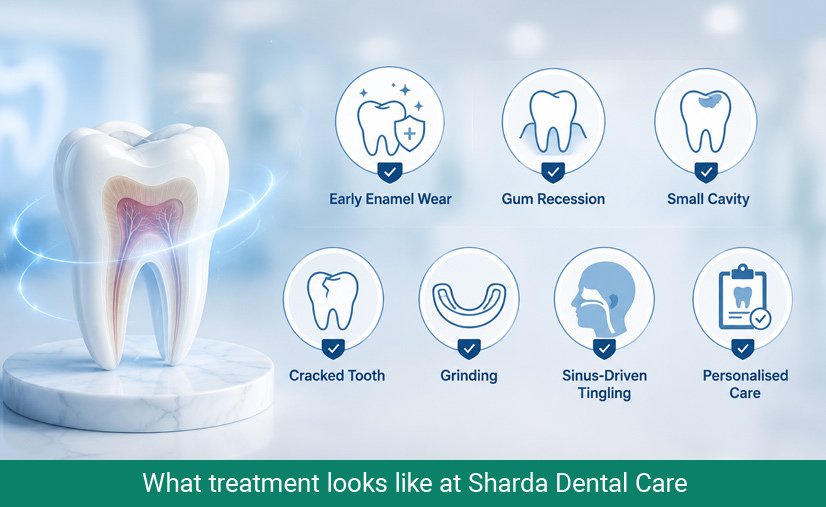
Treatment depends entirely on the cause. There’s no one-size sensitivity solution, despite what the toothpaste ads imply. Here’s what we typically do at our clinic.
For early enamel wear: A professional fluoride varnish or a calcium phosphate paste applied chair-side. Five-minute procedure, usually painless, often gives results within a day. We pair it with a take-home protocol so the next six months work in your favour, not against you.
For gum recession: First we treat the cause, often inflammation or grinding, then we look at whether a graft is needed. Most cases stabilise without surgery if caught early.
For a small cavity: A composite filling matched to your tooth colour. In and out in around 30 minutes per tooth.
For a cracked tooth: Depends on how deep the crack runs. Shallow crack, a bonded restoration. Deeper, a crown to hold the tooth together. If it’s reached the nerve, a root canal saves the tooth.
For grinding: A custom night guard, made from an impression of your bite, worn during sleep. We’ve fitted these for hundreds of patients across Indirapuram and Vaishali. Sleep quality improves alongside the dental benefit, which most patients don’t expect.
For sinus-driven tingling: We rule out dental causes first, then refer you to an ENT colleague we trust. There’s no point doing a root canal on a tooth that’s actually fine.
If you want a clearer picture of how sensitivity treatment works in general, we’ve also written about why teeth hurt with hot or cold foods on the blog.
A note on what we won't do
We won’t recommend a root canal you don’t need. We won’t suggest a crown when a filling will do. And we don’t believe in scaring patients into treatment.
If your tingling is mild and improving, we’ll tell you to go home, switch toothpaste, and come back in three months. If it’s serious, we’ll tell you that too, in plain Hindi or English, with the X-ray on the screen so you can see what we see.
That’s how we’ve practised for over 25 years. It’s why families across Indirapuram, Vaishali, and East Delhi keep coming back, and bring their kids and parents.
Stop guessing. Get a proper diagnosis.
Tingling teeth are easy to ignore for weeks, then suddenly impossible to ignore at 2 AM. The chair-side check that tells you what’s actually going on takes about fifteen minutes. We’ll examine the tooth, take a small X-ray if needed, and give you a plain-English answer: home care, a quick treatment, or something more involved.
Frequently Asked Questions
Why do my teeth tingle after eating sweets?
Sugar particles slip into microscopic tubules in your dentin, the layer beneath enamel. If your enamel is thin or your gums have receded, those tubules sit closer to the nerve, so sugar reaches the nerve quickly and makes it fire. The tingle is brief but reliable. If it happens in the same tooth every time, that tooth probably has early decay or significant enamel loss. Get it checked.
What causes a tingling sensation in teeth?
The most common causes are enamel wear, gum recession, and small cavities. Less common but still real: cracked teeth, recent dental work, grinding at night, sinus infections affecting upper teeth, and anxiety-related hyperventilation. The location, timing, and triggers of the tingle help your dentist narrow it down quickly.
Is tingling teeth serious?
Not usually, if you act on it. Tingling is the earliest warning sign of nerve irritation. At this stage, treatment is simple and conservative. Tingling becomes serious when it progresses to lingering pain, swelling, fever, or pain that wakes you up at night. Those symptoms mean the nerve has likely become irreversibly inflamed and the treatment options narrow significantly.
How do I stop the tingling in my teeth?
For mild, recent tingling, switch to a desensitizing toothpaste with potassium nitrate or stannous fluoride, use a soft brush gently, cut down on acidic drinks, and add a fluoride mouthwash at night. Give it two weeks. If the tingling fades, you’ve solved it. If it doesn’t, or if it gets worse, see a dentist for a proper examination.
When should I see a dentist for sensitivity?
See a dentist within a week if home care hasn’t worked after two weeks, the tingle is in one specific tooth, biting triggers it, or you grind your teeth at night. See one immediately if you have lingering pain over 30 seconds, swelling, fever, tooth discolouration, or pain that wakes you at night. These signs suggest the nerve is inflamed beyond simple recovery.
How can I reduce tooth sensitivity long-term?
Long-term sensitivity reduction is about protecting enamel and gums daily. Brush twice with a soft brush and a desensitizing toothpaste, floss once, drink acidic drinks through a straw, and don’t brush within 30 minutes of having anything acidic. Wear a night guard if you grind. Get a dental cleaning every six months so plaque doesn’t become tartar that drives gum recession. None of this is dramatic. All of it works.